I Couldn't Give Up Ghostty, So I Put It Inside My App


Confession first: I built myself a dev cockpit and then didn't use it.
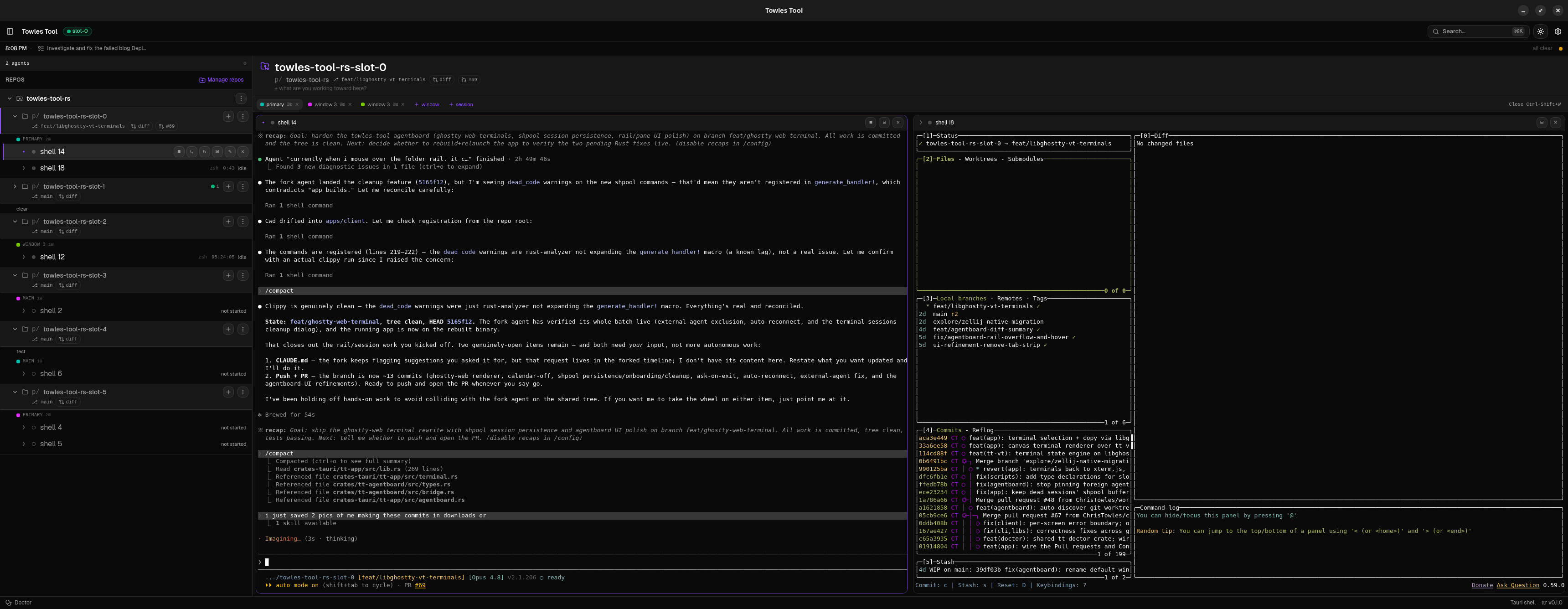
My daily setup is Bun + tmux + Ghostty: my tt CLI (towles-tool) driving a tmux grid, one Claude Code session per pane. I've been rewriting it as a Rust + Tauri app (towles-tool-rs) with embedded xterm.js terminals. Every time I tried to switch, I lasted a few minutes and went back. The app was fine. The terminals weren't. I couldn't give up Ghostty.
So when Mitchell Hashimoto announced libghostty, extracting Ghostty's terminal core into embeddable libraries, the fix was obvious: put Ghostty inside the app.
| Old | New | |
|---|---|---|
| Runtime | Bun/TypeScript CLI | Rust |
| Windowing | tmux | Tauri app |
| Terminal | Ghostty | libghostty (Ghostty's core, embedded) |
The catch: libghostty has never been released. No version tag, no artifacts. You build it from the Ghostty repo, and the C API breaks weekly. But the core is the same code that's run the Ghostty app for years, so pin your commit and it's fine.
What you get in libghostty-vt: the SIMD VT parser and the full terminal state machine (scrollback, styles, Kitty graphics, reflow on resize) plus a render-state API for writing your own renderer. No PTY, no renderer, no font shaping. You bring those.
My setup now: each terminal is a Rust thread owning a libghostty-vt Terminal (via the libghostty-rs bindings). PTY bytes in, dirty-row frames out as JSON, and the WebView just paints them on a canvas. With xterm.js all the parsing and state lived in the JS heap and died on every reload. Now it lives in Rust: reload the WebView and your shells survive.
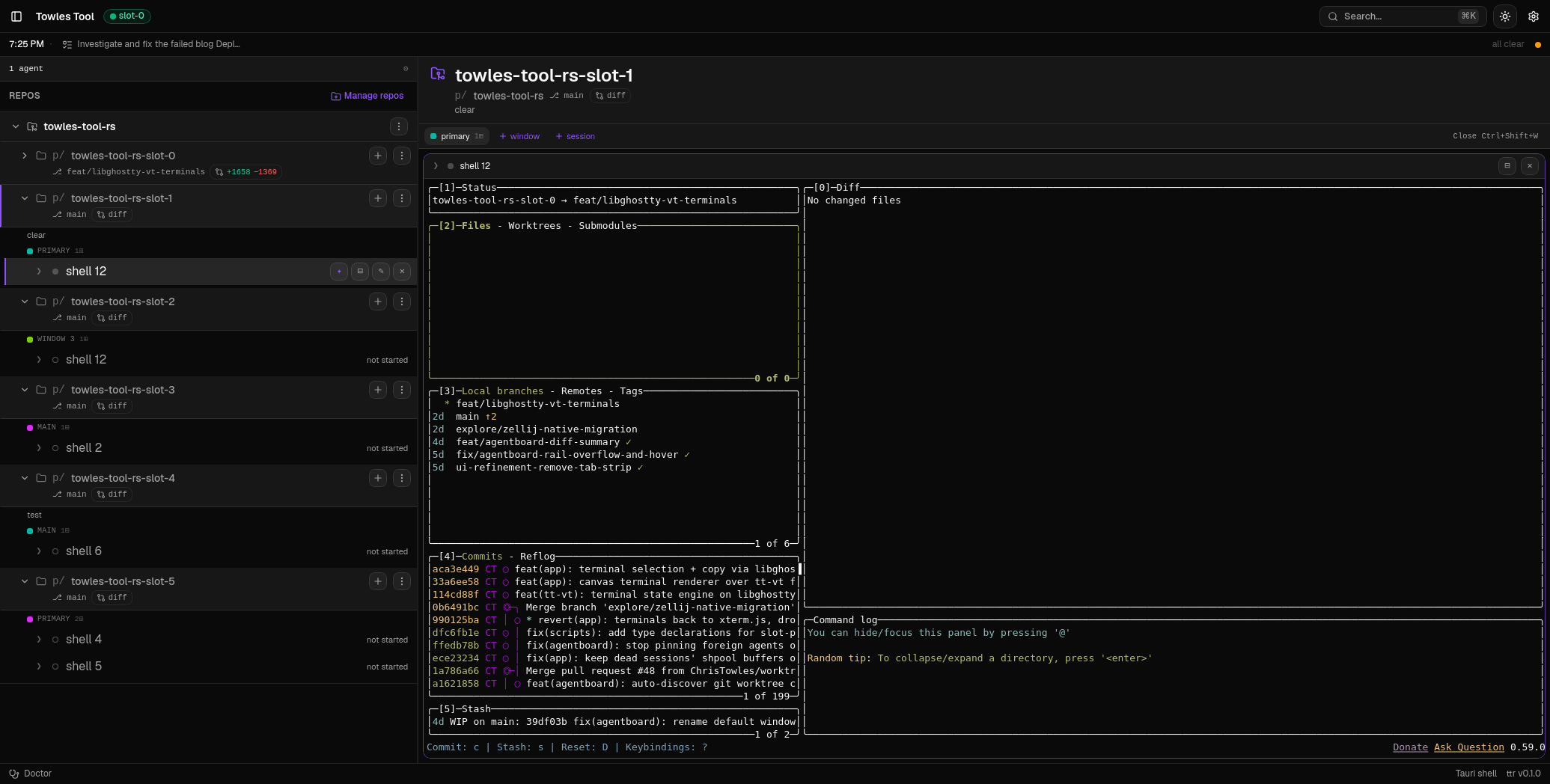
Numbers from the spike: parsing ~418 MB/s, full 200×50 render pass ~190µs. The terminal state layer is just not a cost anymore.
The costs were real too. I had to write a canvas renderer (a few hundred lines) and keyboard encoding (~150 lines, IME is the usual trap), and Zig joined my toolchain since the crate builds libghostty from source.
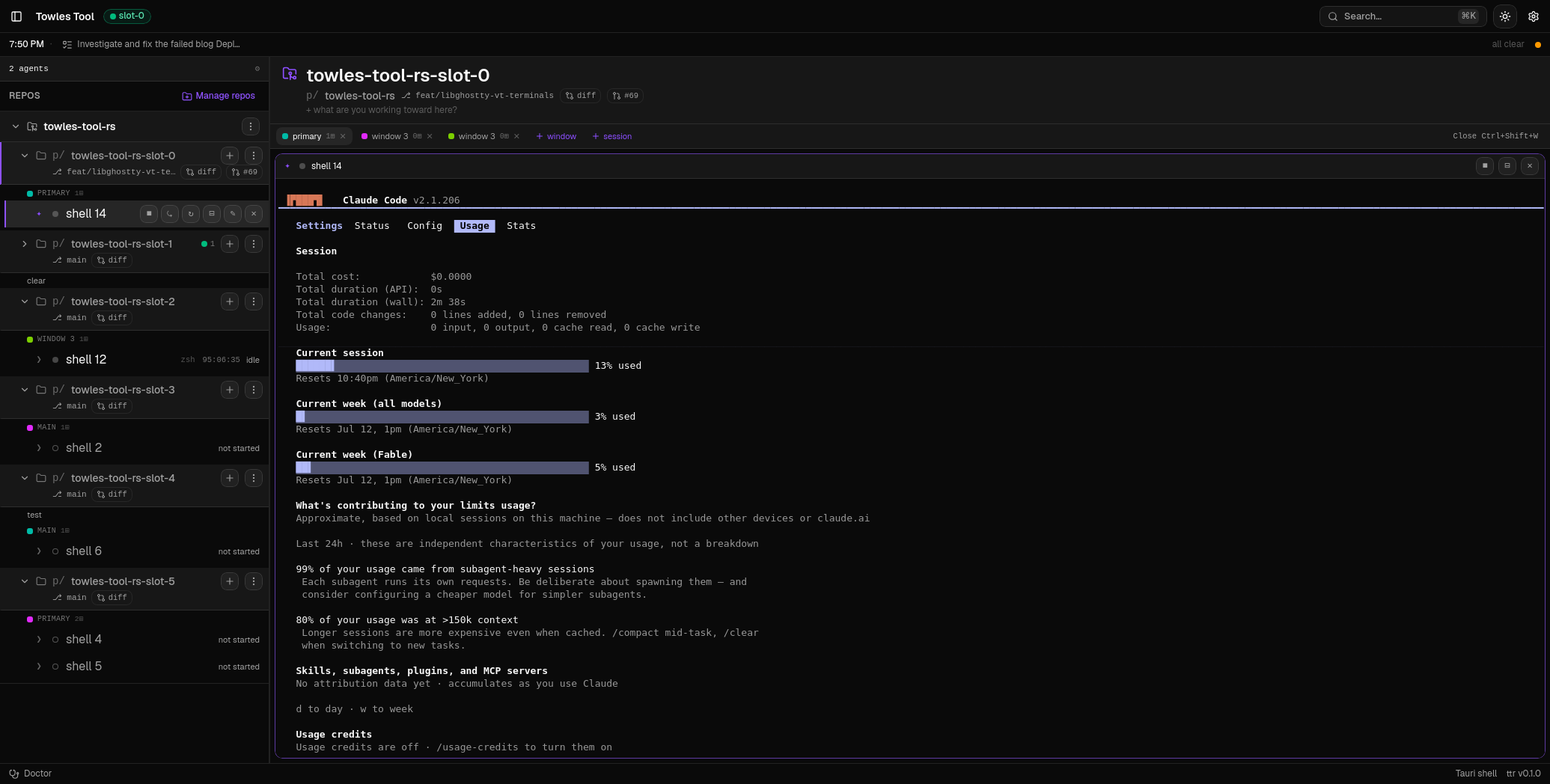
The whole migration took a couple hours with Claude Code on Fable, and used 5% of my weekly quota. I expected it to eat the week. A few of the prompts driving it came straight from Thariq's field guide.
After it shipped I had Fable generate a report on the change with a quiz I had to pass, becuase "the AI did it in a day" is worthless if I can't defend it in review. Another one of his prompts — I liked it enough it's now a /comprehend command in towles-tool-rs, my Claude Code plugin.
If you've got embedded terminals and have been waiting on libghostty: it's real, it works today. Just pin your commit.
MCP Apps: We Spent $100B on AI to Bring Back the Iframe
Karpathy is teaching the world how transformers work. Boris is shipping Claude Code. The frontier of AI just gave us its frontend story, and it's an iframe inside a chat. I built an MCP server to make sure I wasn't hallucinating.
We're Not Asking Enough of These Models
I asked Claude to recreate a jet engine demo from a video clip. A day later, all from my phone, I had a true-scale GEnx-1B with a cycle model, a borescope and a digital twin. Opus 5.5 is good enough and cheap enough to just keep running.